Annual ‘Best Bike City’ Rankings Yields Small Town Surprises
Small towns are leading the nation in bikeability, and even the best big cities can take note.
Bicycle advocacy nonprofit PeopleForBikes released its annual city rankings last week, grading more 3,000 US cities’ bike networks. It found that small cities – those with less than 50,000 residents – are leading the pack in creating safe, vibrant streets for cyclists.
Three communities this year achieved a perfect score, each with less than 2,500 residents. Car-free Mackinac Island, Mich.; Old Orchard, Penn.; and Crested Butte, Col. all earned a maximum score of 100. Big cities struggle to implement basic bike infrastructure, but these tiny jurisdictions are showing what’s possible.
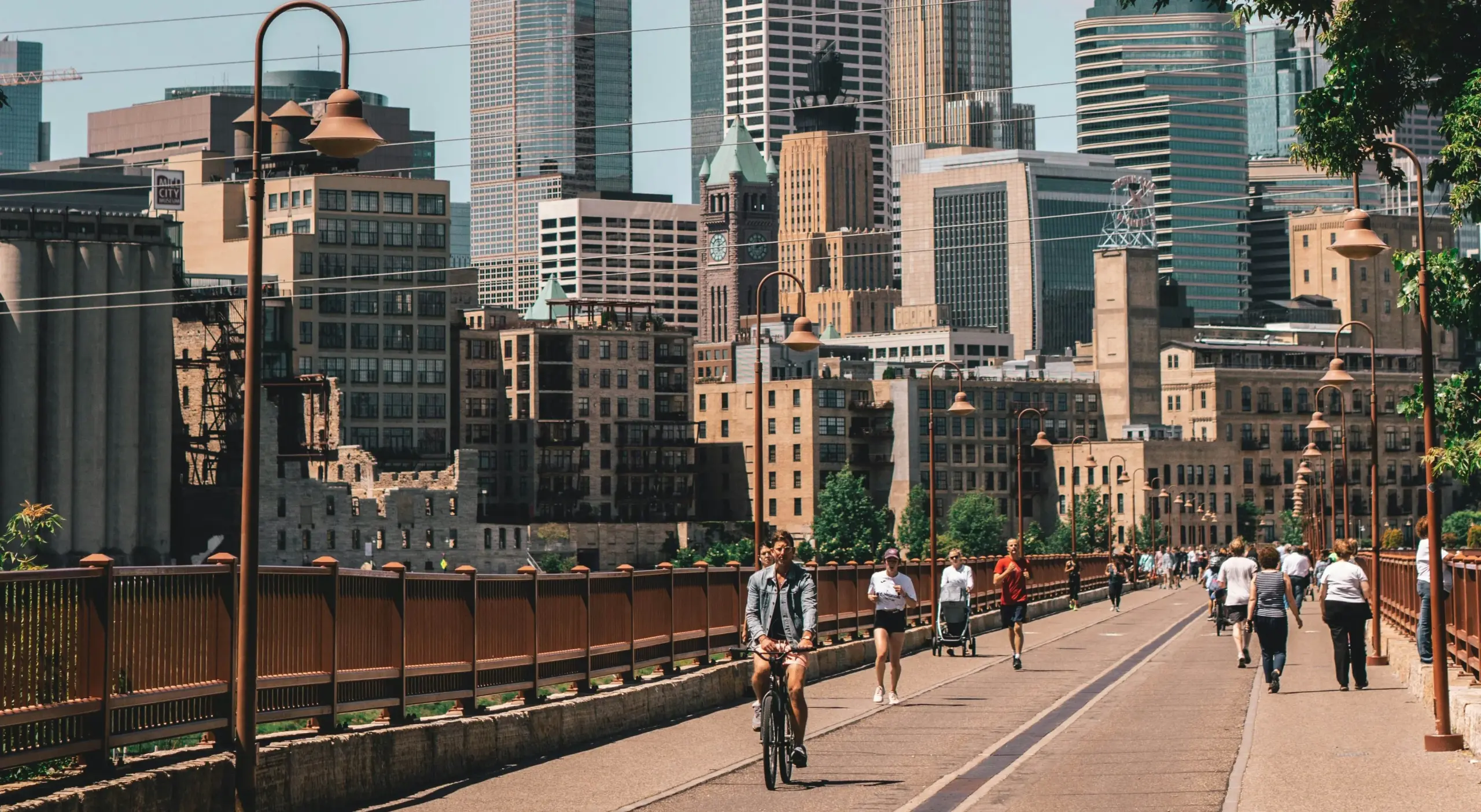
Major municipalities still made headways in reducing car dependency across the US. This year’s big city winners – led by Brooklyn scoring a 70, Minneapolis at 68, and Seattle at 66 – have designed ample opportunities for safe, pleasant, and useful biking. The long-car-dominated New York City borough of Queens and San Francisco round out the top five.
Medium-sized cities Hoboken at 83, Rochester Hills, Mich. at 80, and Anchorage at 72 performed best in their class.
A total 555 jurisdictions have bike networks suitable for everyday riders, indicated by a score of 50 or higher. That number more than doubles last year’s count of 234.
PeopleForBikes updated its scoring methodology for this year’s rankings, better reflecting priorities in safe cycling. The revision incorporates changes made to NACTO’s definition of low-stress streets, updated for the first time in a decade last year. It also integrates the latest census data and improves upon infrastructure classifications from previous years.
Read more Friday’s Headlines Change Their Rhetoric
The analysis follows a two-step process weighing both the existence of bikeable streets and their usefulness. First, PeopleForBikes uses Open Street Maps data to identify “low-stress” streets and intersections, or those more likely to present a comfortable and safe biking experience. Then, it assesses each street’s ability to connect people to common destinations, such as grocery stores, hospitals, and other people.
Corridors often require extensive infrastructure dedicated to bicycles to earn a “low-stress” designation, particularly in larger communities with high volumes of cars. Narrow roads and uncontrolled intersections, found throughout smaller cities, naturally reduce vehicle speeds.
Small cities design roads safely from the get-go, obviating traditional infrastructure altogether. None of the three jurisdictions with perfect scores possess a single conventional bike lane. They instead rely on low-traffic, low-speed roads and a few off-road paths to earn their marks.
Eight communities took home a “most improved” title, indicating significant improvements from their 2025 scores. Leading the pack are Mill Valley, Calif., which jumped to 57 points, an increase of 54 percent. The Northern California suburb is followed by Tampa and West Hollywood with respective 40- and 23-percent increases.
No doubt, U.S. cities have a long way to go in making their bike networks safe, pleasant, and useful. Improvements in communities of every population size and region indicate a positive prognosis – and a toolkit for who to copy.
To see how your city’s bike network stacks up, and to view the full ranking, visit cityratings.peopleforbikes.org.
Read more Talking Headways Podcast: The Transit ‘Abundance’ Playbook
