Why Deadly, Illegal E-Motos Are On The Rise – And Why E-Bikes Are Being Blamed When They Crash
What will it take for the federal government to get illegal, ultra-fast e-motos off the streets, and stop the wave of deadly crashes that have been falsely attributed to safe and legal e-bikes?
Read more Friday Video: Inside the Global Far-Right Push To Rip Out Bike Lanes
That’s the question on the lips of bike advocates across the country as a rising tide of state laws aimed at curbing e-bike use sweep the nation — despite evidence that low-speed pedal-assist vehicles aren’t actually to blame for many of the most headline-grabbing collisions.
Let’s break down where that confusion comes from — and how to end it once and for all.
What a legal e-bike is — and why we need them now more than ever
Clearly defined by the Consumer Product Safety Commission as “two- or three-wheeled bicycles with an electric motor of less than 750 watts, fully operational pedals, and a maximum speed of less than 20 mph when operated solely on electric power,” real e-bikes are widely regarded in advocacy circles as one of the most critical street safety tools around.
That’s mostly because of their potential to reduce the constant driving that’s helped make American roads the deadliest of any high-income country. One study found that of North American e-bike trips replaced a car trip, and those percentages may be even higher in European cities with more diverse mobility landscapes.
Critically, many of those replaced car trips happen at conventional bicycle speeds, rather than the vehicles’ 20 mile per hour max; it just takes less effort (and sweat) for riders to pedal longer distances. And unlike many illegal e-motos, e-bike riders must pedal, or the bike won’t move.
Studies show that, on paths shared with pedestrians, e-bike riders average a super-safe 7.8 miles per hour, compared to 6.8 for conventional bikes; on all roadway segments, cyclists who use pedal-assist still tend to top out around 16 miles per hour, compared to 15.8 for those who don’t.
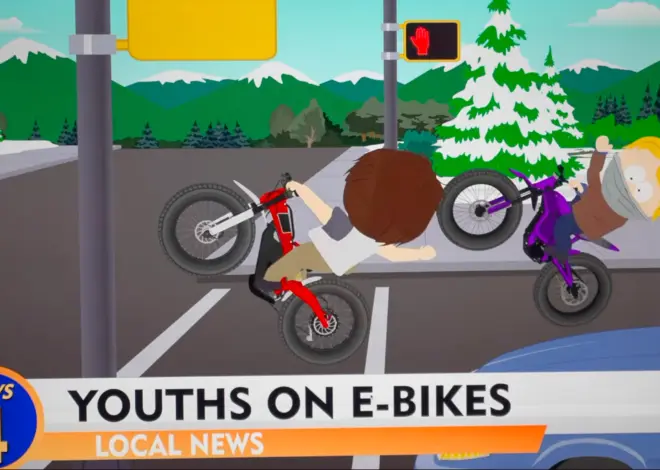
As e-bike use has grown, though, so has public frenzy over “e-bike crashes” — though many of the most-reported collisions ultimately didn’t involve what most cycling advocates or governments would even consider an “e-bike” at all.
Real crashes, wrong vehicle blamed
Of course, none of that is to say that the bloodshed isn’t real. A recent analysis of national data from 30 major US health systems recently reported a 760 percent increase in emergency room visits for crashes involving some form of motorized, two-wheeled vehicle — and a 19.1-fold increase among children and adolescents across the last three years.
Because the distinction between e-bikes and e-motos isn’t typically captured in emergency department records —and police officers who report on crashes don’t always know the difference, either — all of those crashes were recorded simply as “e-bike” injuries in the researchers’ press materials, which mentioned the term a staggering 70 times.
The role of drivers in those collisions, meanwhile, was not mentioned at all, even though the vast majority of all fatal bike crashes involve cars.
To be clear: some of those crashes almost certainly did involve a CSPC-legal e-bike — and the rate of actual e-bike crashes is likely rising, as both e-bike popularity and driver-on-cyclist violence continue to explode.
But time and again, media outlets have been forced to retract disturbing reports that an “e-bike rider” had killed or injured a pedestrian while traveling more than 30 miles per hour, or had been killed or injured themselves in a single-vehicle crash — only to admit later that the vehicle involved was actually an e-moto instead.
“It used to be once a week I would see a crash with a teenager reported as an e-bike crash – now it’s almost every day,” said Matt Moore, General and policy council for PeopleForBikes. “But then you see the picture of [the vehicle], or when it’s corrected later on, and suddenly it’s, ‘Oh; police say that was actually an electric motorcycle.’”
More granular local data, meanwhile, suggests that e-moto use is on the rise — and horrifying crashes involving minors are, too. In California, for instance, “kids between the age of 11 and 14 accounted for 61.7 percent of e-motorcycle crashes, even though children under the age of 16 are legally prohibited from riding e-motorcycles,” ABC7 recently reported.
Moore says that shady e-moto manufacturers know kids like buying their project — and they have no serious incentive to stop selling it to them.
“That’s the target market, and they have hit that market,” he said. “And unless something is done to stop the importation of these products and their online sales …those statistics are going to continue to get more grim.”
What an illegal e-moto is — and why we have so many of them
Moore says most e-motos on US roads tend to slip in through loopholes in federal regulations, which are supposed to police what can be legally sold as an electric bicycle instead of an electric motorcycle — and what gets turned away at the border because it doesn’t meet either modes’ safety standards.
Faster two-wheeled vehicles that don’t meet the Consumer Product Safety Commission’s narrow definition of an “e-bike” are theoretically classified as motorcycles, which means they must have VIN numbers and meet strict safety and import standards set by the National Highway Traffic Safety Administration. Their riders, meanwhile, need to register their vehicles, maintain motorcycle licenses, and buy insurance.
In practice, though, the Chinese manufacturers who dominate the production of all two-wheeled vehicles have become astonishingly adept at evading NHTSA and CSPC scrutiny, by slapping an “e-bike” label on an electric motorcycle box and adding design features to blur the line between the two modes.
And since one in four Chinese residents already own an “e-bike” — most of which, experts warn, are actually classed as throttled e-motos in the US — the companies have a lot of product to move, and a lot of incentive to break into the wide-open North American market.
“These manufacturers are all overseas, and they have very little interest or expertise in what our requirements are here — but they are pretty good at evading enforcement,” added Ash Lovell, PeopleForBikes’ Vice President of Government Relations.
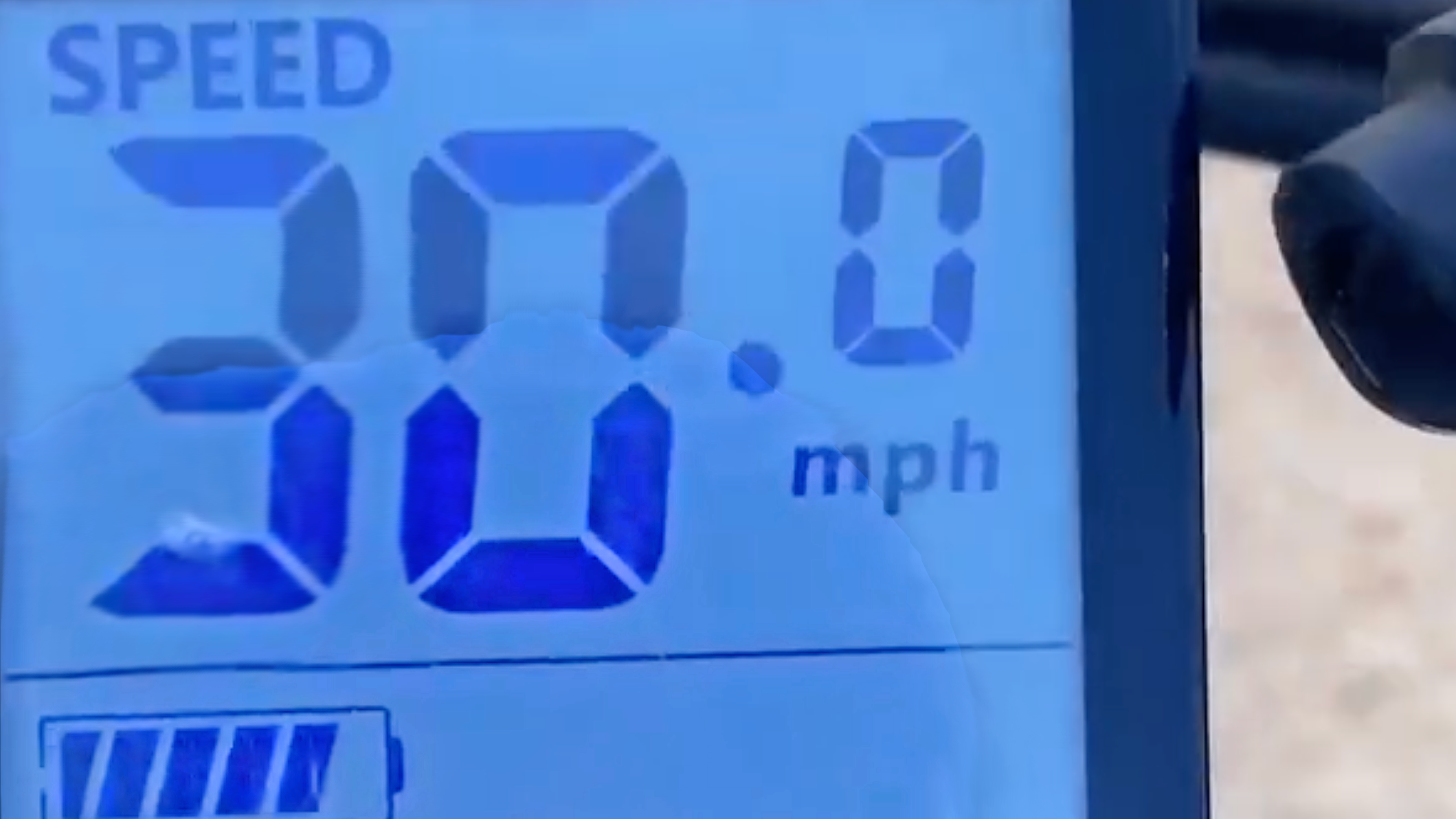
Lovell and Moore say some e-moto manufacturers dodge US regulatory requirements by equipping their vehicles with fake, removable pedals that don’t even turn, since they’re actually powered by throttle alone. Others ship motorcycles with a 20-mile-per-hour setting, but offer another setting capable of reaching 80 miles per hour, and easy instructions on how to unlock it.
And when all else fails, manufacturers can just check a box that their vehicle is really a “dirt bike” intended “off road use only” — even if their marketing materials depict it being ridden on public roads, sometimes even by children.
Read more Talking Headways Podcast: A More Humanized Experience in Honolulu
“I think that the manufacturers and importers of e-motos, have tried to create a gray area,” Moore adds. “[Because] it costs money to make a motorcycle that’s certified and compliant … If you’re avoiding triggering the scrutiny of either [the CPSC or NHTSA], you might be able to get that product entered into the United States without any sort of regulatory framework.”
Because it’s “extremely difficult” for U.S. courts to get jurisdiction over Chinese companies, Moore says consumers typically have no recourse when they buy an e-moto falsely advertised as an e-bike — even when someone gets hurt or killed. And in the rare case that a domestic e-moto company gets sued, accountability is still hard to come by.
“If I’m a brand called ABC E-Moto, and and I get a cease-and-desist letter or judgment or a lawsuit, I can say ‘well, ABC E-moto just went out of business’ — and it’s now DEF E-moto, and we’re selling the exact same product with a different label,” he adds.
State confusion leads to bad state laws
To complicate matters even more, all but eight states have added another layer of complexity to the conversation about what an e-bike is: the three class system, which divides the market into categories based on their speed and the presence of a throttle.
While People For Bikes say it’s been essential to helping states dictate where different sub-types of e-bikes can legally be ridden, some advocates say the three class system has made it harder to define them in relationship to e-motos, since the Class I e-bike — 20 miles per hour max, no throttle — is the only one that neatly aligns with the federal definition of the term.
Class II models, meanwhile, can have a throttle, which isn’t explicitly mentioned by the CSPC — leading some consumers to assume that it’s actually a motorcycle, even though that “accelerator” is often only used to get a heavy cargo bike going from a full stop on a steep hill, and speeds are still capped at 20 miles per hour.
Class IIIs, meanwhile, flatly violate the CSPC definition because they can go 28 miles per hour to help cyclists keep pace when they’re riding in car traffic. But proponents argue they’re still safe, since state laws banish them from standard bike paths when they’re not operating at slower speeds — and because it’s intentionally challenging to actually get them to their top velocity, since they can’t have a throttle, and only speed up when the rider pedals as fast as she can.
And then there’s New York.
By far the largest market for e-bikes and e-motos in the country thanks to its legion of 80,000 delivery workers and the fact that most people can easily live in New York City without a car, New York State adopted a different definition of a Class III e-bike than the rest of the country in 2020, dropping top speeds to 25 miles per hour — but allowing the use of a throttle, unlike class III’s everywhere else.
Moore says that simple shift transformed the class III e-bike into “essentially a moped,” and made it even harder for law enforcement to distinguish between e-bikes and e-motos. And as crashes involving faster, two-wheel vehicles on both sides of that blurry line mounted, neighboring New Jersey — where many deliveristas live — enacted a widely criticized law to require all e-bike riders to carry driver’s licenses, registration and insurance.
“What we’re seeing in New Jersey is that if you make it mandatory to do registration and insurance for electric bicycles, no electric bicycles will be sold,” added Lovell. “We have e-bike retailers that are going out of business in New Jersey because these requirements are on the books. But the overseas e-moto sellers that are still selling into New Jersey? Nothing has happened there.”
And New Jersey may not be the last. Lovell says she and her group have tracked over 400 e-bike related bills this year, which is “up dramatically from when I started five years ago”; shortly before the publication of this article, Ohio introduced a new law eerily similar to New Jersey’s.
“State legislators are seeing that nothing is really being done federally, and they’re all coming up with ‘solutions’ for the quote-unquote ‘e-bike problem,’” Lovell added. “That’s a huge challenge for the bicycle industry — because if there’s 50 different states with 50 different solutions, it’s going to be nearly impossible for anyone to sell bikes.”
That’s not to say that all states have embraced bad e-bike policy. California made headlines in September for a nation-leading law that drew a clearer line between e-bikes and e-motos, and more consequences for falsely advertising the latter as the former to Californians. Usually, states only regulate the use of vehicles on their roads, not their import or sale, which is typically the federal government’s purview.
In most states, though, Moore says getting similar laws passed has been a battle.
“In every meeting that I have with legislators and staff, there’s usually about half an hour explaining what an electric bicycle is and is not,” he added “In Minnesota, I had a legislator say, ‘So, the one I just got for my kid isn’t legal?’ And I’m like, ‘I’m sorry, sir, but it’s not.’”
How to fix this mess
At the end of the day, Moore says that the federal government is the one responsible for regulating all vehicles on the road, and they must stamp out the e-moto crisis once and for all — rather than leaving it to often-confused state leaders to try to make up for their failures.
That starts with the National Highway Traffic Safety Administration stepping up and treating e-motos as what they are: dangerous illegal motorcycles dressed in sheep’s clothing. He particularly urges officials to search and intercept more import shipments of fake “e-bikes” — and publicize those seizures far and wide.
“It’s a shot across the bow for these sellers,” he adds. “It’s [saying:] ‘You’re not going to be able to get away with it.’ Do you really want to risk your entire container being seized, and never getting it back, and maybe getting fined as well? That would change the landscape.”
Both NHTSA and the Consumer Product Safety Commission, meanwhile, need more resources to conduct that market surveillance. Congress could provide those resources. That would better position the legislative body to enact the Safe SPEEDS Act, which would direct the CSPC to draw a clearer line between e-bikes and e-motos and require the agency to publish periodic studies on crashes involving both.
The bill would also help federal officials teach local governments, law enforcement agencies, and emergency medical workers how to standardize crash reports so they’re not lumped together. And in the meantime, PeopleForBikes stresses that education is critical to help the public and media outlets understand the difference between an e-bike and an e-moto, especially when they crash.
Without these sorts of structural fixes, keeping dangerous illegal e-motos off our roads and protecting the good name of the humble e-bike will both be an uphill climb — and not the easy kind with pedal-assist.