In New Jersey, Mayors Show How Quickly We Can Slow Down Drivers
The new mayor of one of New Jersey’s biggest cities will cut through the usual plodding public process by installing 100 quick-build street safety improvements to make scores of intersections safer before the first year of his term is even over.
Read more Latest Report Shows That Sprawl Continues To Hamstring Youth, Limit Opportunities
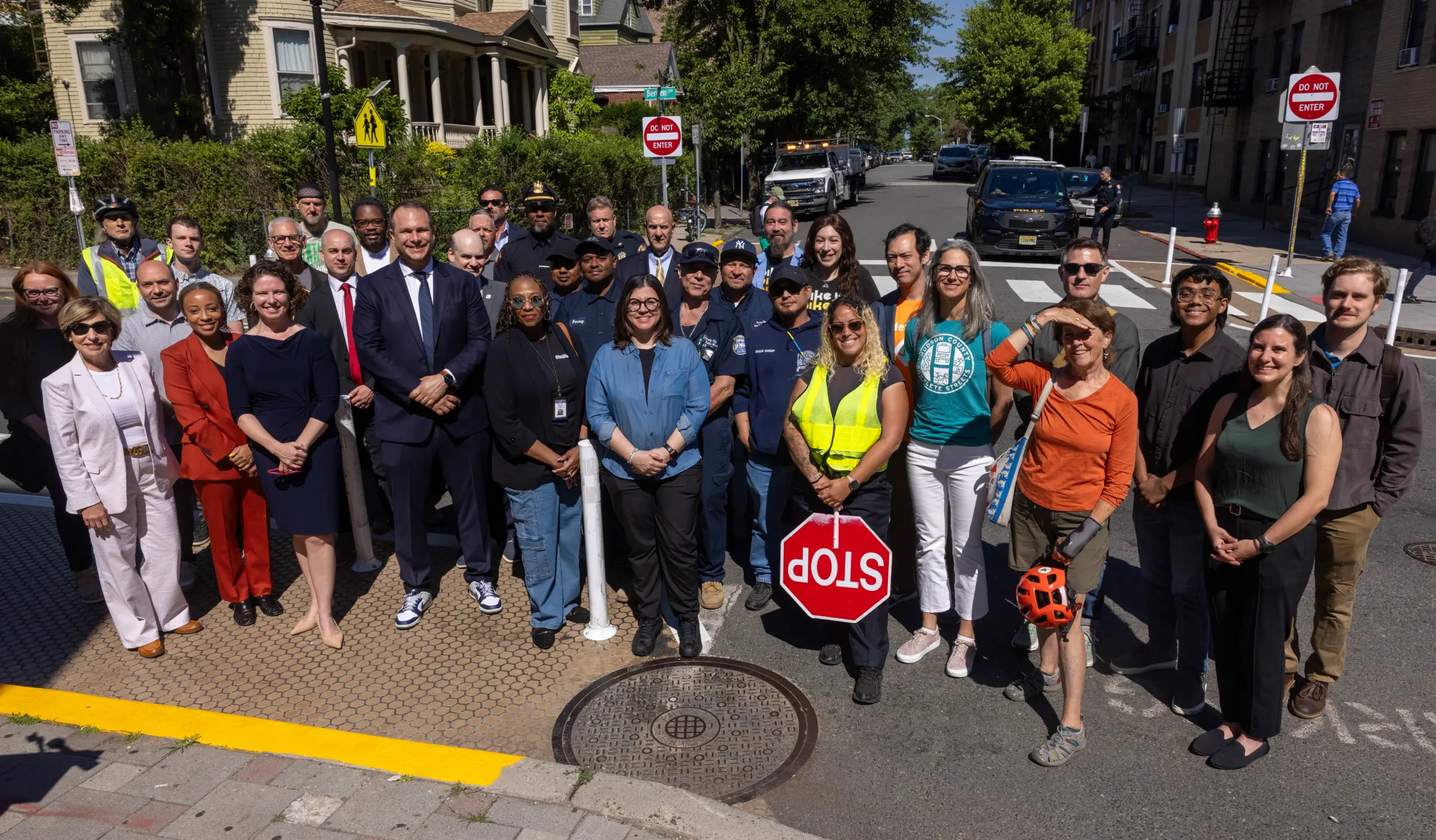
Jersey City Mayor James Solomon, who was elected last year in part due to the support of the livable streets movement, announced the speedy safety improvements earlier this week as part of an update to the city’s seven-year-old commitment to Vision Zero.
“Every family in Jersey City deserves to travel our streets without fear, whether they’re walking their kids to school, riding a bike, or just crossing the street,” said Solomon. “This is how we deliver on that promise. We know that when we design our streets for safety, we protect everyone, and we are not going to stop until zero deaths on Jersey City’s roadways is not just a goal, but a reality.”
The safety improvements include curb extensions at 30-plus intersections, nine crossings with rectangular rapid flashing beacons, 30-plus all-way stops, and traffic signal improvements like leading pedestrian intervals. These basic, relatively cheap traffic calming and pedestrian-focused changes are proven to increase street safety and reduce pedestrian injuries.
These will be welcome changes for most as 57 percent of Jersey City residents commute to work via transit, walking, or cycling. There are an average of nine traffic deaths and 40 serious injuries per year in Jersey City, a city of 300,000 — a fatality rate that the makes Jersey City one of the safest cities. For comparison, Memphis has an annual fatal crash rate of nearly 24 per 100,000 residents, the highest in the nation.
Solomon also announced that the city would focus additional safety improvements in a so-called High-Injury Network comprised of 28 road segments and 43 intersections that crash data indicate remain unsafe. The improvements will include lighting, possible speed limit changes, and curb management throughout the city.
Big shoes to fill
Solomon has a tough act to follow in former Mayor Steve Fulop who, with the help of then-Director of the Department of Infrastructure Barkha Patel, made significant street safety improvements. Cycling in Jersey City tripled as a commuting mode between 2019 and 2024 and the protected bike lane network grew from zero to 25 miles.
Patel’s role — which cut across agencies like transportation, parks, police, and sanitation — allowed her to avoid bureaucratic silos that often stymie street safety work. The newly appointed city officials understand the importance of continuing the mission.
Read more Mamdani Earmarks $96M for New Greenways as Current Paths Crumble
“No fatality or serious injury from traffic violence in Jersey City is acceptable — zero is the only acceptable number,” said Jersey City’s new Infrastructure Director Andrew Kaplan.
“The updated Action Plan sharpens our focus on the locations where serious crashes still occur so every dollar and design decision prevents the next one. With the launch of our 2026 quick-build program, we’re targeting the safety improvements that will most effectively reduce crashes and save lives.”
North Jersey leads
Hoboken, Jersey City’s neighbor to the north, is the poster child for a city that’s successfully dedicated itself to reaching reducing traffic violence.
With a population just under 60,000, the “Mile Square City” implemented progressive street safety measures like daylighting at intersections along with bus and bike lane cameras to reach that goal. Hoboken has now gone a remarkable nine years without a traffic death.
Hoboken Mayor Emily Jabbour joined Solomon at the press conference, also announcing a recommitment to the city’s Vision Zero goal to eliminate traffic deaths and injuries by 2030. Jabbour signed her first executive order in March that recommitted the city to Vision Zero — and expanded it to be a partnership across municipal borders to include collaborating with Jersey City.
Nearly 50 U.S cities have adopted Vision Zero since 2014, but few have done the hard work needed to significantly improve street safety. But the evidence shows that where cities are investing, Vision Zero is working.
