Moving Fine Art in Santa Fe: A Careful Approach to Decorative Collections
Relocating a home in Santa Fe can involve more than sofas, wardrobes, and kitchen boxes. For collectors, the most important possessions may be paintings, handcrafted ceramics, sculptures, antique mirrors, textiles, and decorative objects accumulated over many years. These pieces often have unusual dimensions, fragile surfaces, or sentimental value that makes ordinary moving methods inadequate.
A collection-focused relocation begins with understanding what is being moved and how each piece should travel. Homeowners can review general moving information at https://starvanlinesmovers.com/ before organizing the practical details of the shipment.
Build a Collection Inventory Before the First Box
Start with the pieces that deserve special attention.
Photograph paintings, sculptures, ceramics, and other valuable objects before packing. Record dimensions, materials, identifying marks, and any existing imperfections. This creates a useful reference for checking condition after delivery.
For Santa Fe households, regional moving options can also be explored through https://starvanlinesmovers.com/locations/new-mexico when arranging transportation for art-filled residences and specialized collections.
Divide Items by Handling Requirements
Not every decorative object needs identical protection. Group possessions according to their materials and construction.
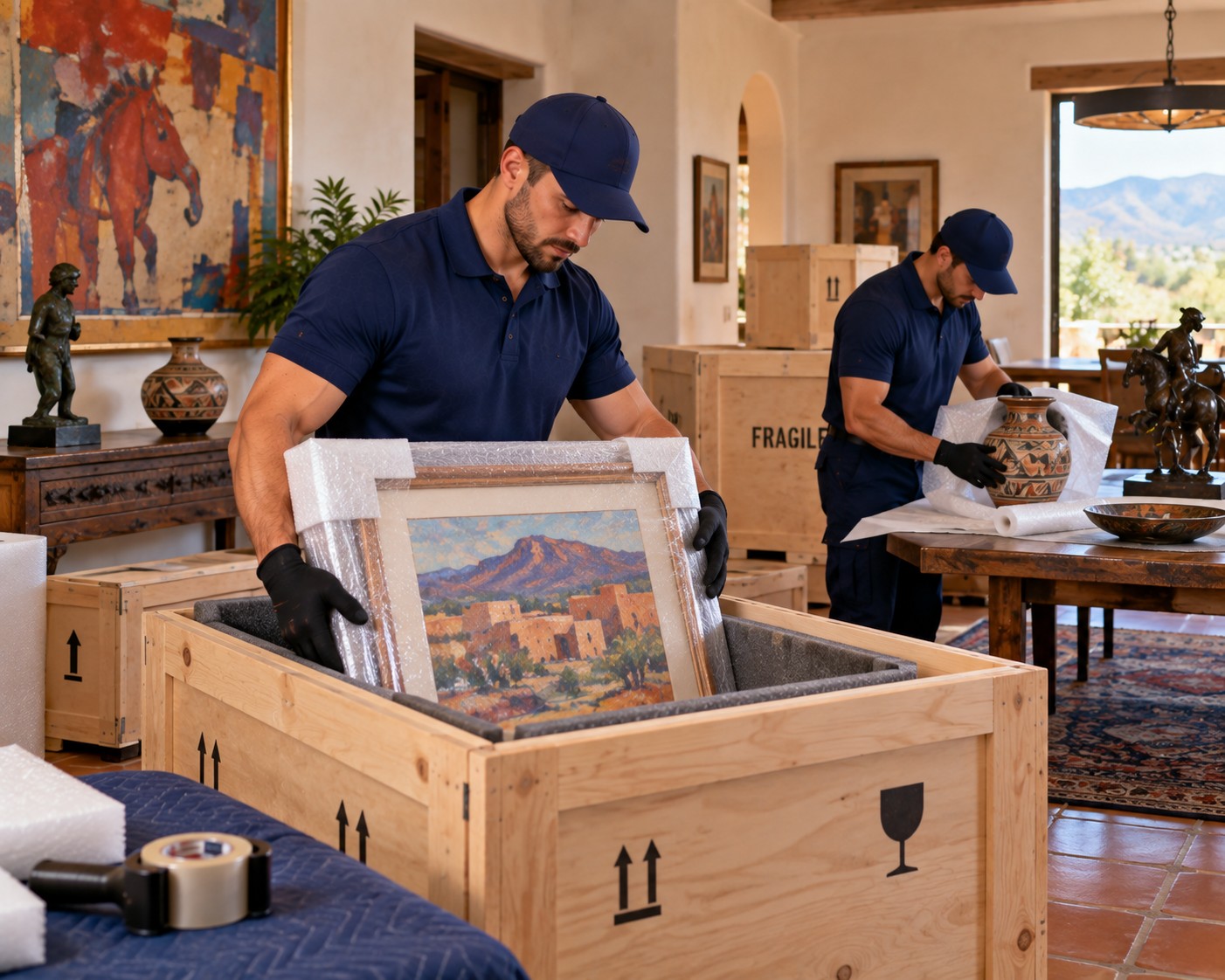
Paintings may require careful protection around frames and canvases. Ceramics and glass need cushioning against impact. Sculptures can have protruding elements that require additional stabilization. Textiles may need protection from moisture, dust, and compression.
This classification gives Santa Fe Movers a clearer picture of what will be loaded and which pieces deserve extra attention.
Measure the Route Through the House
The dimensions of the artwork are only one part of the equation.
A large framed painting may fit perfectly on a wall but become difficult to carry through a narrow hallway. Tall sculptures can create similar problems around staircases and corners.
Before moving day, measure:
- Doorways and interior openings
- Staircases and landings
- Hallway widths
- Elevator entrances, when applicable
- The route between the collection and loading area
Do the same at the new property. Knowing the route in advance can prevent unnecessary handling once the shipment arrives.
Protect Frames, Corners, and Finished Surfaces
Framed artwork needs attention around its most vulnerable points.
Corners can be damaged when a piece is tilted or maneuvered through an opening. Finished wooden objects can also pick up scratches from contact with other belongings.
Use appropriate padding and protective materials, and prevent shifting during transportation. Decorative pieces should not be positioned where heavier household items can press against them.
Give Sculptures Specialized Attention
Three-dimensional artwork presents a different challenge.
A sculpture may have an uneven center of gravity, delicate extensions, or a narrow base. Its shape can make standard boxes unsuitable.
Think About Stability
The objective is not simply to surround an object with padding. It must also remain stable during transportation.
Identify vulnerable areas before wrapping the piece. If an object contains detachable components, keep those parts organized and clearly associated with the main piece.
Santa Fe Movers can assist with planning when collectors provide detailed information about unusual dimensions, materials, and handling requirements ahead of time.
Consider the New Mexico Climate
Environmental exposure deserves consideration when valuable collections are relocated.
Paintings, paper, wood, textiles, and certain finishes can be sensitive to changes in temperature and humidity. Minimize unnecessary exposure while items are being carried between the residence and vehicle.
The destination should be ready before delicate pieces arrive. Clear the rooms where artwork will be placed and avoid leaving sensitive objects outdoors or in unsuitable areas during the unloading process.
Keep Documentation Close at Hand
Important collection records should not disappear into an unidentified moving carton.
Keep photographs, purchase records, appraisals, provenance information, and other relevant documentation organized separately. If a collection contains particularly valuable works, owners may also want to review valuation and insurance considerations before transportation.
A dedicated folder can make post-move organization significantly easier.
Plan the New Display Before Unloading
Collectors often have a specific vision for how their pieces should appear in a new home.
Create a basic placement map for major paintings, mirrors, sculptures, and decorative furniture. This does not need to be a professional interior-design document. Simple notes showing which room receives each major piece can be enough.
The placement plan also helps the crew understand where larger objects should be carried immediately instead of temporarily positioning them in another room.
Choose Handling Over Speed
A successful art relocation should prioritize controlled movement rather than rushing through the loading process.
Star Van Lines Movers can be considered when a Santa Fe household needs assistance coordinating ordinary furnishings alongside artwork and decorative possessions. Clear communication about fragile items, access conditions, and destination rooms allows the moving process to be organized around the collection.
Collectors should also identify which pieces they prefer to keep with them rather than placing everything into the main shipment.
Prepare the Home for Arrival
Before the truck reaches the destination, remove obstacles from the planned routes and make sure entrances are accessible. Keep pets and unnecessary household activity away from areas where valuable pieces will be carried.
Once the shipment arrives, delicate artwork can be directed toward its intended room while larger decorative objects are positioned according to the prepared layout.
A thoughtful move gives fine art the attention it deserves from the moment it leaves the wall until it reaches its new setting. With careful documentation, measured pathways, appropriate protection, and organized unloading, a Santa Fe collection can make the transition without turning valuable possessions into an afterthought.